Jair Bolsonaro’s Brazil would be a disaster for the Amazon and global climate change

File 20181009 72130 idhvpj.jpg?ixlib=rb 1.1
Antonio Scorza / ShutterstockBlog first published on October 9, 2018  Ed Atkins, University of Bristol

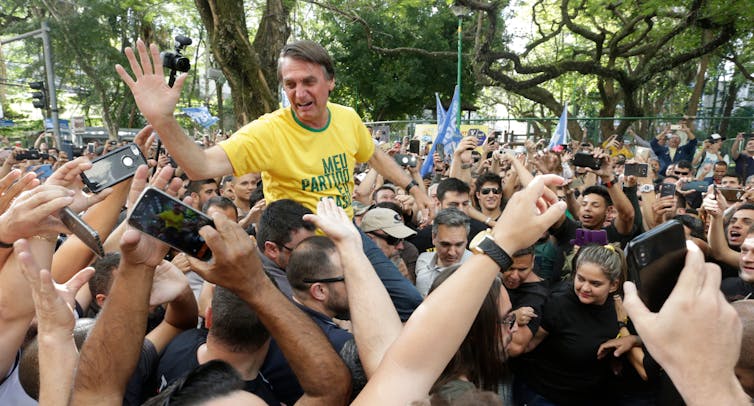
It is perhaps a cruel irony that, on the same day the Intergovernmental Panel on Climate Change released a landmark call for urgent action, Jair Bolsonaro surged to victory in the first round of Brazil’s presidential elections. Although the leader of the far-right Partido Social Liberal did not achieve the 50% of the popular vote required to win outright, and will now have a run-off against Fernando Haddad of the Partido dos Trabalhadores (Workers’ Party), his rise has posed some painful and divisive questions both within Brazil and beyond. Continue reading
Pesticides and suicide prevention – why research needs to be put into practice

File 20180920 129853 1rykkmo.jpg?ixlib=rb 1.1
Shutterstock

Duleeka Knipe, University of Bristol; David Gunnell, University of Bristol, and Ian Hussey, Ghent University

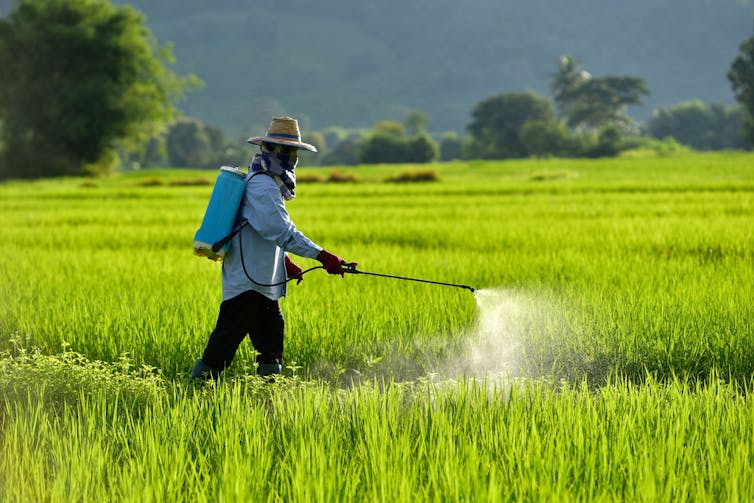
As many as 800,000 people around the world die every year by suicide, with 76% of these deaths in low and middle income countries like India and China. Between 110,000 and 168,000 people die from self-poisoning using pesticides – the same pesticides which are banned in wealthier countries due to human health and environmental concerns. Continue reading

Courts can play a pivotal role in combating climate change

File 20181012 119126 5b4sic.jpg?ixlib=rb 1.1
Calin Tatu/Shuttestock.com

Alice Venn, University of Bristol

The international community has widely acknowledged the severe threats posed by the impacts of climate change to a series of human rights, including the rights to life, health, and an adequate standard of living. But a stark gap has emerged between this acknowledgement in global climate policy – evidenced by a non-binding clause in the preamble of the Paris Agreement – and their actions to meet promised targets. Continue reading

Difficult childhood experiences could make us age prematurely – new research

File 20180906 190636 vped6v.jpg?ixlib=rb 1.1
Iakov Filimonov/Shutterstock

Amanda Hughes, University of Bristol and Meena Kumari, University of Essex

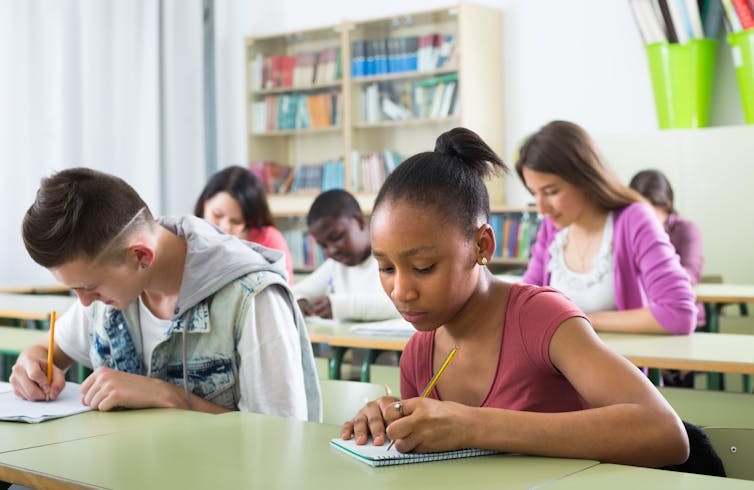
We know that comparatively disadvantaged people, even in rich countries, have worse health and shorter life expectancy than others. But what is it exactly about socioeconomic disadvantage and other environmental difficulties that affects our biology? And at what age are we most vulnerable to these effects? Continue reading

Race, Female Suffrage, and Parliamentary Representation: Centenary Reflections

Blog post by Dr Sumita Mukherjee, Senior Lecturer in History, discussing the roles of history and race in global suffrage.

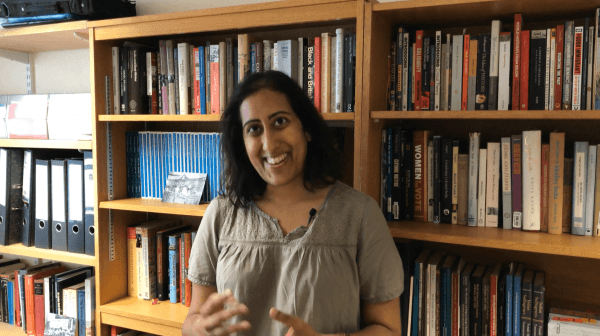
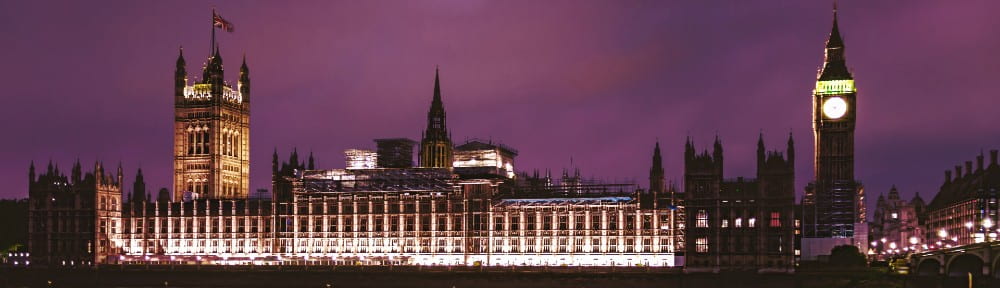
In February 2018, I held a workshop in parliament to discuss the ways in which we could learn from the history of suffrage struggles, and the fights for political representation in the Global South, and use those lessons in reflecting on the centenary of the Representation of the People Act in Britain. The workshop was supported by PolicyBristol, History&Policy and the national Vote 100 campaign. Some of the podcasts from this event are available online. Speakers came from a range of academic and policy backgrounds, with an equally mixed audience. Continue reading